
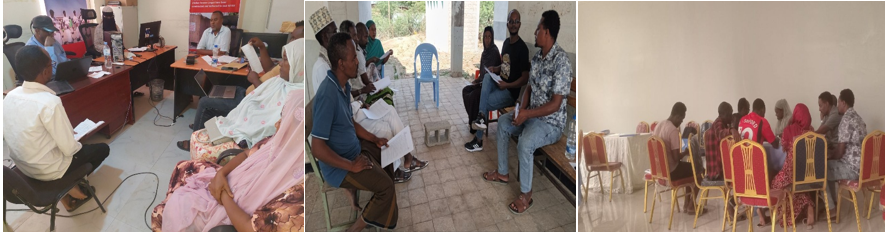
Context:The recent northern Ethiopia conflict have been marked by massive hardship that caused a lot of mothers and children to hardship, difficulty and destitution severely impacting social service institutions. The 3 years of crisis have left collapsed and deeply affected social system, fragile economy, and unfathomable changes in social structures and values making people’s survival is challenging. On top of the northern Ethiopia conflict that affected the region devastatingly, the region is being stricken by different manmade and natural catastrophes-Recurrent public health emergencies, recurrent flood and ethnic conflicts being among others. Health System (Health, Nutrition, Hygiene, and sanitation): The health system is badly affected by the conflict and children and women particularly children under 5 and pregnant and lactating mothers, are disproportionately affected and it is manifested by high zero dose children and high home delivery rates. Malnutrition remains the major concern in the region. IYCF-E practices are sub-optimal. The region is one of the regions in the country that have high ODF practice. Protection and L&D: Though there were tremendous improvements in school enrolment in pre-northern conflict era, education is one of the sectors sever affected with the conflict. Many schools’ infrastructures are below standard, there is huge shortage of scholastic material, parents, communities, and students’ attitude towards learning severely affected. ECM and GBV especially female genital cutting widely practices in the region. Community platforms: Both community and government owned community structures affected with both natural and manmade emergencies in Afar. Women development army groups that have been doing great community work have loosened now; the social bond among community members especially in conflict affected areas severely affected; HEWs are not working effectively since many health posts are either totally destructed or partially damaged. |
Implementation Strategy & Technical Guidance:To support project activities both in the current workplan and in the future, SBC center of excellence will be established in Semera University and regional advocacy workshop will be organized to mobilize resources, to improve COEs implementation and to get buy in by regional officials. The university team is expected to conduct Social and behavior change (SBC)/RCCE capacity assessment in sector bureaus of the region. Selected University staffs will be trained in ToT on SBC/RCCE to be champions for future SBC activities. Then after the University staffs (The SBC CoE members) are expected to accomplish different community level interventions outlined in the workplan. The SBC CoE is expected to be the resource center for different partners to do research activities; to develop and contextualize different IEC/BCC materials; and to try/implement innovative SBC approaches. |
Capacity Development:SBC CoE will be established in Semera University. The CoE will have equipped office in the University and staff members from public Health, education, social science and humanity colleges and other colleges and departments will work together to strengthen the CoE. Selected University staffs working with the CoE will be trained on ToT on SBC/RCCE to be champions for future SBC activities. The SBC CoE is expected to be the resource center for different partners to do research activities; to develop and contextualize different IEC/BCC materials; and to try/implement innovative SBC approaches. In addition, the SBC CoE will be supported to include SBC in the Universities curricular activities (Graduate and undergraduate programs, PGCs, community-based practices etc.). |
Other Partners involved: Afar regional Health bureau, Afar regional women and social affairs bureau, Afar public health institute. |
Other Document Details:Prevention, Detection, and Mitigation of Post-distribution Aid Diversion: Post-distribution aid diversion is linked to fraudulent, corrupt, collusive, or obstructive practices as defined in the general terms and conditions of the Programme Cooperation Agreement 15.3 (b). UNICEF is dedicated to upholding the highest standards of transparency and accountability in the management and utilization of its funding and resources and maintains a zero-tolerance policy towards fraud, including aid diversion in the contexts of both pre and post distribution and provision of goods and services. It is imperative for all UNICEF Implementing Partners to ensure that robust mechanisms are in place to track and safeguard the distribution of resources, ensuring that they reach the intended beneficiaries. All UNICEF implementing partners are obliged to create and maintain an environment that prevents, mitigates, detects, and reports post-distribution aid diversion. Managers at all levels have a responsibility to ensure that systems are in place to maintain this environment, are committed to and as such protect vulnerable populations in humanitarian crisis, including from vulnerabilities to aid diversion. By entering into this agreement with UNICEF, the CSO undertakes to ensure that: 1.There are functional internal control systems and processes that set out how the risk of aid diversion is managed with assurance that these established controls are effective. 2.Mechanisms are set up and sustained to prevent diversion and ensure that the right information is disseminated to both its staff and the program beneficiaries. 3. Mechanisms are in place to regularly monitor and review existing risks to swiftly respond to any changes in operating context (political, security, and economic) and adjust programming accordingly. 4. Full compliance is in place for existing standard operating procedures with an aim to detection and to ensure standard reporting measures. 5. There is an action plan which spells out the agreed process for dealing with incidents of aid diversion. |
Data Processing Agreement: Yes |
Activities involving children and young people: No |
Special Conditions for Construction Works by Implementing Partners: No |
Gender Rating:Significant The project will strengthen community structures like social workforce, village health leaders, Women development leaders and pregnant mothers. The project will also reach communities with GBV, CM and FGM related key messages in selected urban and semi urban areas by developing and performing Skits using amateur artists/University students. GBV, CM and FGM are practices that are predominantly practices on women and girls. By addressing these palpable problems, this project will have significant impact on alleviating gender related problems. |
Equity Rating: Significant The project will try to reach communities living in hard-to-reach areas with lifesaving key messages. We will also try to understand the available mechanisms to reach communities living in remote areas with key and lifesaving messages. This project will also promote utilization of U-report among youths and enable them to be heard among decision makers. |
Sustainability Rating: Significant The major goal of this project is to establish and strengthen SBC CoE which will lead SBC interventions, researches and trials in the region in the future. |
Risk & Proposed Mitigation Measures: Social & Environmental: Working with community structures like religious leaders, community representatives. In addition, it may need to work out of the normal working hours especially to mitigate risks due to weather. Financial: It is its first exposure for Semera University to sign PD/SPD with any UN agencies. So, financial management through the UNICEF system may be a bit challenging. To mitigate this expected challenge technical support and monitoring will be provided with PA/PMU and program staffs. Operational: Academic institutions operational procedures are a bit different from public service institutions. The operational procedures in the University may create challenge in effective and efficient utilization of resources in this project. Frequent discussions are being held with university management and operation/finance staffs to mitigate those expected challenges. Organizational: By signing this document, the organization commits to adhere to the zero tolerance to Sexual Exploitation and Abuse (SEA) and thus fully comply to the general terms and conditions for Programme Cooperation Agreement (PCA) signed between both organizations on 24/10/2024. The Organization has reviewed provisions of articles 4, 11, and 16 of these terms and conditions in the PCA that clearly outlines its responsibilities related to ethical standards, commitment for transparency and assessment of capacity related to SEA. |